| |
| |
|
TRÁI TIM
MẸ: NƠI CON NƯƠNG NÁU - ĐƯỜNG ĐẾN VỚI CHÚA |
|
"Chúa Giêsu muốn dùng con để làm
cho Mẹ được nhận biết và yêu mến" |
|
April 20, 2009 - Monday in Second
Week
of Easter
LITURGICAL/THEME MEDITATION:
"Unless one is born anew, he
cannot see the kingdom of God"
UNIVERSAL CHURCH/WORLD EVENT(S):
Papal YouTube Message in 27
Languages Beats Record;
Vatican Deplores Belgium's
Criticism of Pontiff
SAINT OF THE DAY
St. Conrad of
Parzham
GENERAL
MARIOLOGY
THE DIVINE
HISTORY AND LIFE
OF THE
VIRGIN MOTHER OF GOD
Book Two - Chapter II -
HER
FIRST YEARS IN THE TEMPLE
DIVINE MERCY
Divine Mercy in My Soul
Notebook I
TEACHING/TESTIMONY/CONVICTION:
On Divine Mercy and the
Catholic Family
|
|
DAILY LITURGICAL MEDITATION |
|
"Unless one is born anew, he cannot see the
kingdom of God"
Scripture: John 3:1-8
1 Now there was a man of the Pharisees, named Nicode'mus, a ruler of
the Jews. 2 This man came to Jesus by night and said to him, "Rabbi, we
know that you are a teacher come from God; for no one can do these signs
that you do, unless God is with him." 3 Jesus answered him, "Truly,
truly, I say to you, unless one is born anew, he cannot see the kingdom
of God." 4 Nicode'mus said to him, "How can a man be born when he is
old? Can he enter a second time into his mother's womb and be born?" 5
Jesus answered, "Truly, truly, I say to you, unless one is born of water
and the Spirit, he cannot enter the kingdom of God. 6 That which is born
of the flesh is flesh, and that which is born of the Spirit is spirit. 7
Do not marvel that I said to you, `You must be born anew.' 8 The wind
blows where it wills, and you hear the sound of it, but you do not know
whence it comes or whither it goes; so it is with every one who is born
of the Spirit."
Meditation: Do you nourish your faith with regular reading
and prayerful reflection of the word of God? Nicodemus was hungry for
God's word and became a closet disciple of Jesus. He sought Jesus out,
though surreptitiously in the dead of the night. Why? Nicodemus was a
"leader of the Jews", "a teacher of Israel" (John 3:10),
and a member of the religious party most opposed to the teaching of
Jesus. In fact, John’s gospel account states that it was Nicodemus' own
group, the Pharisees, which intimidated the authorities against
confessing Jesus (John 12:42).Instead he engaged him in a seemingly
unrelated topic of conversation. Jesus said that rebirth was necessary
to enter the kingdom of God. Of course, Nicodemus the Pharisee had
already found religion, so he thought that Jesus must have referred to
physical rebirth. No, Jesus responded, someone who is reborn
spiritually knows the experience as surely as one who has been refreshed
by an invisible breeze. How can a respected rabbi among the Jews not
know this? And that is precisely the point. Nicodemus is the first of
what we might loosely call the official clergy with whom Jesus has
personal engagement. The Gospel portrays Nicodemus as a defender of
Jesus' right to a fair trial (John 7:-51).
Nicodemus also helped to bury Jesus with honor. Nicodemus did not
understand the new birth which Jesus spoke of until after the
resurrection.
What does it mean to be reborn? The new birth Jesus speaks of
is a spiritual birth to new life and relationship with God as his sons
and daughters. This new birth is made possible when one is baptized into
Christ and receives the gift of the Holy Spirit. God wants to renew all
his people in the gift of new life in his Holy Spirit. This new life
brings us into God's kingdom or heavenly rule. What is God's kingdom?
God's kingdom is that society in which God's will is done on earth as
it is in heaven. To be reborn is to enter that society in which
God is honored and obeyed, to live as his son or daughter, and to enter
into possession of that life which comes from God himself, a
never-ending life of love, peace, joy, and freedom from sin and the fear
of death. Do you know the joy and freedom of new life in Jesus Christ?
"Lord Jesus Christ, you offer us a new birth in the Holy Spirit.
Renew in me the gift of faith and new life in your Holy Spirit. Help me
to draw near to you and to believe in your life-giving word. May your
kingdom come and may your will be done in my life today and always."
Psalm 2:1-9
1 Why do the nations conspire, and the peoples plot in vain?
2 The kings of the earth set themselves, and the rulers take counsel
together, against the LORD and his anointed, saying,
3 "Let us burst their bonds asunder, and cast their cords from us."
4 He who sits in the heavens laughs; the LORD has them in derision.
5 Then he will speak to them in his wrath, and terrify them in his fury,
saying,
6 "I have set my king on Zion, my holy hill."
7 I will tell of the decree of the LORD: He said to me, "You are my son,
today I have begotten you.
8 Ask of me, and I will make the nations your heritage, and the ends of
the earth your possession.
9 You shall break them with a rod of iron, and dash them in pieces like
a potter's vessel."
www.dailyscripture.net
RETURN
TO TOP
|
|
UNIVERSAL CHURCH/WORLD EVENTS |
Papal YouTube Message in 27 Languages Beats Record
VATICAN CITY, APRIL 19, 2009 ( Zenit.org).- The publication of Benedict XVI's Easter message on the YouTube Web site broke the record with its translation into 27 languages.
The message, delivered before the Pope imparted his blessing "urbi et orbi" [to the city of Rome and the world], was posted online with subtitles for various languages.
The translation initiative responded to many requests received through the Holy See's online channel. It is the first time a YouTube video has been posted in as many languages.
The video includes Easter greetings that the Pontiff expressed in 62 languages from the balcony of St. Peter's basilica.
The Holy Father's message is subtitled in: English, Spanish, Arabic, Czech, German, Esperanto, French, Hindi, Hungarian, Armenian, Japanese, Italian, Lithuanian, Latvian, Malabar, Polish, Portuguese, Romanian, Russian, Slovenian, Albanian, Swedish, Vietnamese, Chinese, Slovak, Swahili and Tamil.
--- --- ---
On the Net:
Vatican channel: http://www.youtube.com/vatican
Vatican Deplores Belgium's Criticism of Pontiff
Denounces Attempt to Silence Pope's Moral Teaching
VATICAN CITY, APRIL 19, 2009 ( Zenit.org).- The Vatican Secretariat of State is expressing regret at the Belgian parliament's protest related to Benedict XVI's statement on his recent trip to Africa, about condoms and fighting AIDS.
On April 2, the parliament passed a proposal demanding that the government launch an official protest against the Pontiff for his comments to journalists, calling his words "unacceptable." Frank de Coninck, the country's ambassador to the Holy See, delivered the official condemnation on Wednesday to Archbishop Dominique Mamberti, the Vatican's Secretary for Relations with States.
A communiqué released Friday by the Vatican secretariat reported: "The Ambassador of the Kingdom of Belgium, acting under instructions from the Minister of Foreign Affairs, has informed the Secretary for Relations with States of the resolution with which the House of Representatives in his country asked the Belgian Government to 'condemn the unacceptable statements of the Pope on the occasion of his journey to Africa and to protest officially to the Holy See.' The meeting took place on 15 April 2009."
The statement continued: "The Secretariat of State notes with regret this action, unusual in the context of the diplomatic relations existing between the Holy See and the Kingdom of Belgium.
"It deplores the fact that a Parliamentary Assembly should have thought it appropriate to criticize the Holy Father on the basis of an isolated extract from an interview, separated from its context, and used by some groups with a clear intent to intimidate, as if to dissuade the Pope from expressing himself on certain themes of obvious moral relevance and from teaching the Church's doctrine.
"As is well known, the Holy Father, in answer to a question concerning the efficacy and the realistic character of the Church's positions on combating AIDS, stated that the solution is to be sought in two directions: on the one hand through bringing out the human dimension of sexuality; and on the other, through true friendship and willingness to help persons who are suffering.
"He also emphasized the commitment of the Church in both these areas. Without this moral and educational dimension, the battle against AIDS will not be won."
Africa's appreciation
The statement acknowledged: "While in some European countries an unprecedented media campaign was unleashed concerning the predominant, not to say exclusive, value of prophylactics [such as condoms] in the fight against AIDS, it is consoling to note that the moral considerations articulated by the Holy Father were understood and appreciated, in particular by the Africans and the true friends of Africa, as well as by some members of the scientific community.
"As one can read in a recent statement of the Regional Episcopal Conference of West Africa: 'We are grateful for the message of hope which [the Holy Father] came to entrust to us in Cameroon and Angola.
"'He came to encourage us to live in unity, reconciled with one another in justice and peace, so that the Church in Africa can herself be a burning flame of hope for the life of the entire continent. And we thank him for having restated for all, in a nuanced, clear and insightful way, the common teaching of the Church concerning the pastoral care of sufferers from AIDS.'"
RETURN
TO TOP
|
|
DAILY LITURGICAL SAINT |
|

April 20, 2009
St. Conrad of Parzham
(1818-1894)
Conrad spent most of his life as porter in Altoetting, Bavaria, letting
people into the friary and indirectly encouraging them to let God into
their lives.
His parents, Bartholomew and Gertrude Birndorfer, lived near Parzham,
Bavaria. In those days this region was recovering from the Napoleonic
wars. A lover of solitary prayer and a peacemaker as a young man, Conrad
joined the Capuchins as a brother. He made his profession in 1852 and
was assigned to the friary in Altoetting. That city’s shrine to Mary was
very popular; at the nearby Capuchin friary there was a lot of work for
the porter, a job Conrad held for 41 years.
At
first some of the other friars were jealous that such a young friar held
this important job. Conrad’s patience and holy life overcame their
doubts. As porter he dealt with many people, obtaining many of the
friary supplies and generously providing for the poor who came to the
door. He treated them all with the courtesy Francis expected of his
followers.
Conrad’s helpfulness was sometimes unnerving. Once Father Vincent,
seeking quiet to prepare a sermon, went up the belltower of the church.
Conrad tracked him down when someone wanting to go to confession
specifically requested Father Vincent.
Conrad also developed a special rapport with the children of the area.
He enthusiastically promoted the Seraphic Work of Charity, which aided
neglected children.
Conrad spent hours in prayer before the Blessed Sacrament. He regularly
asked the Blessed Mother to intercede for him and for the many people he
included in his prayers. The ever-patient Conrad was canonized in 1934.
Comment:
As
we can see from his life as well as his words, Conrad of Parzham lived a
life that attracted others because of a special quality, something
Chesterton alluded to when he wrote, "The moment we have a fixed heart
we have a free hand" (Orthodoxy, p. 71). If we want to understand
Conrad, we have to know where he fixed his heart. Because he was united
to God in prayer, everyone felt at ease in Conrad’s presence.
Quote:
"It was God’s will that I should leave everything that was near and dear
to me. I thank him for having called me to religious life where I have
found such peace and joy as I could never have found in the world. My
plan of life is chiefly this: to love and suffer, always meditating
upon, adoring and admiring God’s unspeakable love for his lowliest
creatures" (Letter of Saint Conrad).
http://www.americancatholic.org/Features/SaintofDay
RETURN TO TOP
|
|
GENERAL
MARIOLOGY |
THE DIVINE HISTORY AND
LIFE
OF THE
VIRGIN MOTHER OF GOD
BOOK TWO
Treats of the Presentation
of the Princess of Heaven in the Temple, the
Favors She Received at the Hand of God, the Sublime
Perfection
with which She Observed the Rules of the Temple,
the Heavenly Excellence of Her Heroic Virtues
and Visions, Her Most Holy Espousal and
other Events up to the Incarnation
of the Son of God
CHAPTER II.
INSTRUCTION GIVEN BY THE QUEEN CONCERNING RELIGIOUS VOWS.
HER FIRST
YEARS IN THE TEMPLE.
I will relate that, which the Most High explained to
me on one occasion in his own words:
"The works of Her, who was to be the Mother of the
Godman, were altogether and in every way most perfect, and even to
understand them exceeds the capacity of all human creatures and of the
angels. Her interior acts of the virtues were so precious and of such
great merit and favor, that they surpass all that the seraphim can do;
and thou, my soul, wilt much better understand, than be able to explain
them with words of thy tongue. But it is my will, that during thy
pilgrimage in thy mortal body thou place most holy Mary as the beginning
of thy joy, and that thou follow Her through the desert of renunciation
and abnegation of all that is human and visible. Follow Her by a perfect
imitation according to the measure of thy strength and of the light
which thou receivest. Let Her be thy guiding star and thy Directress:
She will manifest to thee my will and will let thee find my holy law
which is written in Her by the power of my right hand: meditate upon it
day and night. She by her intercession will strike the rock of Christ's
humanity (Num. 220, 11), in order that in this desert may abound the
waters of divine grace and light, so that thy thirst may be quenched,
thy understanding enlightened, and thy will inflamed. She will be a
pillar of light to illuminate thy path (Exod. 12, 21) and a cloud to
afford thee shade and refreshment against the ardors of thy passions and
the fierceness of thy enemies.
"Thou wilt have in Her an angel, who will guard and
guide thee, and (Exod. 13, 21) lead thee away from the dangers of
Babylon and of Sodom, so that my punishment shall not reach thee. Thou
wilt have in Her a Mother to love thee, a Friend to counsel thee, a
Mistress to direct thee, a Protectress to shield thee and a Queen whom
thou canst serve and obey as a handmaid. In the virtues, which this
Mother of the Onlybegotten exercised in the temple, thou wilt find a
summary of all the highest perfections according to which thou shouldst
arrange thy life; an exact and reliable copy of all her sanctity; the
beauty of virginity, the loveliness of humility, the utmost promptness
in devotion and obedience, the stead fastness of faith, the certitude of
hope, the fire of love and the most complete outline map of all the
wonders of my right hand. According to this rule thou must regulate thy
life, by this mirror thou must arrange and adorn it, adding to the
beauty and grace of a bride that wishes to enter into the chamber of her
Spouse and Lord."
"If the nobility and condition of the teacher are a
spur to the disciple and make his doctrine more amiable acceptable, who
can attract thee more powerfully than thy Instructress, who is the
Mother of thy Spouse, chosen as the most pure and holy among women, and
without blemish of sin, being at the same time a Virgin and the Mother
of the Onlybegotten of the eternal Father, the splendor of his Divinity
in his own essence? Hear then this sovereign Mistress; follow Her in
close imitation, and meditate without ceasing upon her admirable
excellence and virtues. Remember, that the life and conversation She led
in the temple is the original, which all the souls, that consecrate
themselves after Her as spouses of Christ, must copy within themselves."
The above is the explanation and instruction, which the Most High gave
me in outline concerning the life and conduct of the most holy Mary in
the temple.
RETURN TO TOP
|
|
DIVINE MERCY
|

Divine Mercy In my soul
Notebook I
(continued)
One day, one of the Mothers
(probably Mother Jane) poured out so much of her anger on me and humiliated
me so much that I thought I would not be able to endure it. She said to me,
"You queer, hysterical visionary, get out of this room; go on with you
Sister!" She continued to pour out upon my head everything she could think
of. When I got to my cell, I fell on my face before the cross, and then
looked at Jesus; but I could no longer say a single word. Yet I concealed
everything from the others and pretended that nothing had happened between
us.
Satan always takes advantage of such moments; thoughts of discouragement
began to rise to the surface - for your faithfulness and sincerity - this is
your reward. How can one be sincere when one is so misunderstood? Jesus,
Jesus, I cannot go on any longer. Again I fell to the ground under this
weight, and I broke out in a sweat, and fear began to overcome me. I had no
one to lean on interiorly. Suddenly I heard a voice within my soul,
"Do not fear; I am with you".
And an unusual light illumined
my mind, and I understood that I should not give in to such sorrows. I was
filled with a certain strength and left my cell with new courage to suffer.
Nevertheless, I began to grow a bit negligent. I did not pay attention to
these interior inspirations and try to distract myself. But despite the
noise and the distraction, I could see what was going on in my soul. The
word of God is clear, and nothing can stifle it. I began to avoid encounters
with the Lord in my soul because I did not want to fall prey to illusions.
However, in a sense, the Lord kept pursuing me with His gifts; and truly I
experienced, alternately, torture and joy. I made no mention here of the
various visions and graces God granted me during this time, because I've
written this down elsewhere.
But I will simply mention here that these various sufferings had come to a
peak, and I resolved to put an end to these doubts of mine before my
perpetual vows. Throughout my probation, I prayed for light for the priest
to whom I was to open up my soul to its depths. I asked God that He himself
would help me and grant me the grace to be able to express even the most
secret things that exist between me and Him and to be and to be so disposed
that, whatever the priest would decide, I would accept as coming from Jesus
himself. No matter what judgment he would pass on me, all I wanted was the
truth and a decisive answer to certain questions. I put myself completely in
God's hands, and (all) my soul desired was the truth. I could not go on
living in doubt any longer although in the depths of my soul, I was so very
sure these things came from God, that I would lay down my life for this.
However, I placed the confessor's opinion above all, and I made up my mind
to do as he thought best and to act according to the advice that he would
give me. I looked forward to that moment which would decide the course of my
actions for the rest of my life. I knew that everything would depend on
this. It mattered little whether what he would say to me would be in accord
with my inspirations or quite the contrary; this no longer mattered to me. I
wanted to know the truth and follow it.
Jesus, You can help me! From this moment, I have begun anew. I conceal all
the graces within my soul and await whomsoever the Lord will send me. With
no doubt in my heart, I asked the Lord himself to deign to help me during
these moments, and a courage of sort entered my soul.
I must again mention that there are some confessors who seem to be true
spiritual fathers, but only as long as things go well. When the soul finds
itself in greater need, they become perplexed, and either cannot or will not
understand the soul. They try to get rid of the person as soon as possible.
But if the soul is humble, it will always profit in some little way or
other. God himself will sometimes cast a shaft of light into the depths of
the soul, because of its humility and faith. The confessor will sometimes
say something he had never intended to say, without even realizing it
himself. Oh, let the soul believe that such words are the words of the Lord
himself! Though indeed we ought to believe that every word spoken in the
confessional is God's, what I have referred to above is something that comes
directly from God. And the soul perceives that the priest is not master of
himself, that he is saying things that he would rather not say. This is how
God rewards faith.
I have experienced this many times myself. A certain very learned and
respected priest (probably Father Wilkowski, the sisters confessor at Plonk),
to whom I sometimes happened to go to confession, was always severe and
opposed to these matters (which I brought up to him). But on one occasion he
replied to me, "Bear in mind, Sister, that if God is asking this of you, you
should not oppose Him. God sometimes wants to be praised in just this way.
Be at peace; what God has started, He will finish. But I say this to you;
faithfulness to God and humility. And once again: humility. Bear well in
mind what I have told you today." I was delighted, and I thought that this
priest had understood me. But it so turned out that I never went to
confession to him again.
(Note Book 1- to be continued)
RETURN TO TOP |
|
CATHOLIC TEACHING/CONVICTION/TESTIMONY |
On Divine Mercy and the Catholic Family
"It Is the Merciful Love of God that Solidly Unites the Church"
CASTEL GANDOLFO, Italy, APRIL 19, 2009 ( Zenit.org).- Here is a translation of the greeting Benedict XVI gave today before praying the Regina Caeli with the people gathered in the courtyard of the pontifical residence at Castel Gandolfo, south of Rome.
* * *
Dear Brothers and Sisters!
On this Sunday that concludes the Easter Octave I renew from my heart fervent Easter wishes to you who are present and to those who are joining us through radio and television broadcasts. In the climate of joy that comes from the faith in the risen Christ, I would like to express a most cordial "thank you" to all of those -- and there are truly many -- who wanted to send me a sign of affection and spiritual nearness whether for the Easter festivities or for my birthday -- April 16 -- or for the anniversary of my election to the Chair of Peter which recurs today. I thank the Lord for this symphony of so much affection. As I was able to affirm recently, I never feel alone.
Even more in this singular week, which, for the liturgy, constitutes a single day, I experienced the communion that surrounds and sustains me: a spiritual solidarity, essentially nourished by prayer, which is manifested in thousands of ways. From my colleagues in the Roman Curia to the parishes that are geographically most distant, we Catholics form -- and we must feel that we are -- one family, animated by the same sentiments of the first Christian community, of which the text of the Acts of the Apostles, which we read this Sunday, says: "The community of believers were of one heart and one soul" (Acts 4:32).
The communion of the first Christians had the risen Christ as true center and foundation. The Gospel says that, in the moment of the Passion, when the Divine Master was arrested and condemned to death, the disciples were dispersed. Only Mary and the women, with the apostle John, remain together and follow him to Calvary.
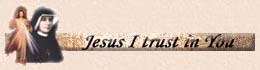
Resurrected, Jesus grants a new unity to his followers, stronger than before, invincible, because it is based not on human resources, but on divine mercy, which makes them all feel loved and forgiven by him. Therefore it is the merciful love of God that solidly unites the Church, today as yesterday, and that makes humanity a single family, divine love, which through Jesus crucified and risen forgives our sins and renews us interiorly. Animated by such a deep conviction, my beloved predecessor, John Paul II, desired that this Sunday, the second Sunday of Easter, be named Divine Mercy Sunday, and pointed to the risen Christ as the font of confidence and hope, welcoming the spiritual message given by the Lord to St. Faustina Kowalska, synthesized in the invocation: "Jesus, I trust in you."
As for the first community, it is Mary who accompanies us in life every day. We invoke her as "Queen of Heaven," knowing that her royalty is like that of her Son: all love, and merciful love. I ask you again to entrust to her my service to the Church, while with confidence we say to her: "Mater misericordiae, ora pro nobis [Mother of mercy, pray for us.]"
[After the Regina Caeli the Pope said:]
First of all I address a cordial greeting and fervent wishes to the brothers and sisters of the Eastern Churches that, following the Julian calendar, celebrate Holy Easter today. May the risen Lord renew the light of faith in all and give abundance of joy and peace.
A conference organized by the United Nations on the 2001 Durban Declaration against racism, racial discrimination, xenophobia and related intolerance will begin tomorrow in Geneva. This is an important initiative because still today, despite the lessons of history, these deplorable phenomena continue. The Durban Declaration recognizes that "all peoples and individuals constitute one human family, rich in diversity. They have contributed to the progress of civilizations and cultures that form the common heritage of humanity. Preservation and promotion of tolerance, pluralism and respect for diversity can produce more inclusive societies."
These affirmations lead to the demand for firm and concrete action, at the national and international levels, to prevent and eliminate every form of discrimination and intolerance. There must be a vast educational undertaking that exalts the dignity of the person and teaches fundamental rights. The Church, for her part, repeats that only the recognition of the dignity of man, created in the image and likeness of God, can constitute a secure reference for such a task. From this common origin, in fact, there flows a common human destiny that must awaken in everyone and all a strong sense of solidarity and responsibility. I pray that the delegates present at the conference in Geneva will be able to work together, in the spirit of dialogue and reciprocal acceptance, to put an end to every form of racism, discrimination and intolerance, marking in this way a fundamental step toward the affirmation of the universal value of the dignity of man and his rights, in a horizon of respect and justice for every person and people.
[Translation by Joseph G. Trabbic]
[The Holy Father greeted the pilgrims in various languages. In English, he said:]
I am happy to greet all the English-speaking visitors present for today's Regina Caeli prayer, including the group from Dulwich Preparatory School, Cranbrook in Kent. As we rejoice in the new life that the Risen Christ has won for us, let us renew our resolve to be faithful to our baptismal promises by rejecting Satan and living according to the example of the Lord. In our prayer we commend our perseverance to the intercession of Mary, Queen of Heaven. Upon all of you I invoke God's abundant blessings of peace and joy!
© Copyright 2009 -- Libreria Editrice Vaticana
RETURN TO TOP
|
|
Monthly Index
General Archive
2008
General Archive
2007
General Archive
2006
General Archive 2005
General Archive 2004 |
|
|
|

Hits since 3/16/2004
Màn điện
toán toàn cầu của Thiếu Nhi Fatima được bắt đầu với trang Main từ ngày
9/12/1999,
nhưng
mãi tới Mùa Hè 2001 mới tạm xong,
cuối
cùng đã được chỉnh trang về cả hình thức lẫn nội dung từ mùa hè năm
2002,
để rồi
chính thức tái ra mắt vào ngày 25/3/2003 cho đến nay.
TNFatima.org
do
Thiếu Nhi Fatima
chủ trương và thực hiện
Mọi ý kiến
đóng góp xin gửi về
Webmaster
|
|
|
|
|